
Innsightful Technology
Straight out of lab, adapted into real-world processes, our technology combines empirical data with world-renowned expert knowledge for your mental well-being.
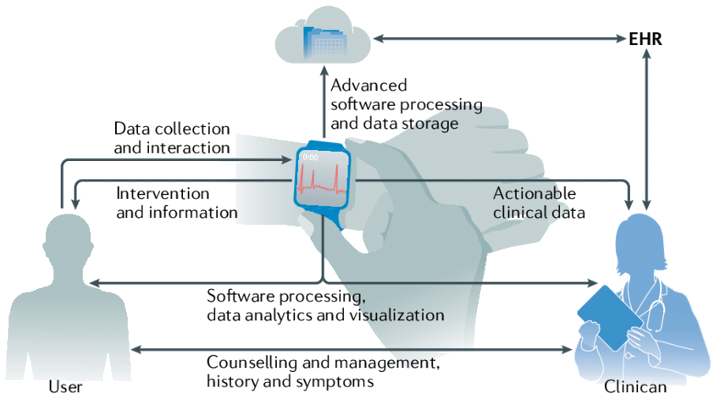
Innsightful’s product leverages physiological signals to continuously monitor users’ emotional and physiological states. By using these real-time biomarkers, the platform enables tailored interventions that adapt dynamically to each individual’s current emotional needs. This continuous, personalized approach supports early intervention, often before psychological symptoms become fully apparent, aligning with the broader shift toward precision mental health.
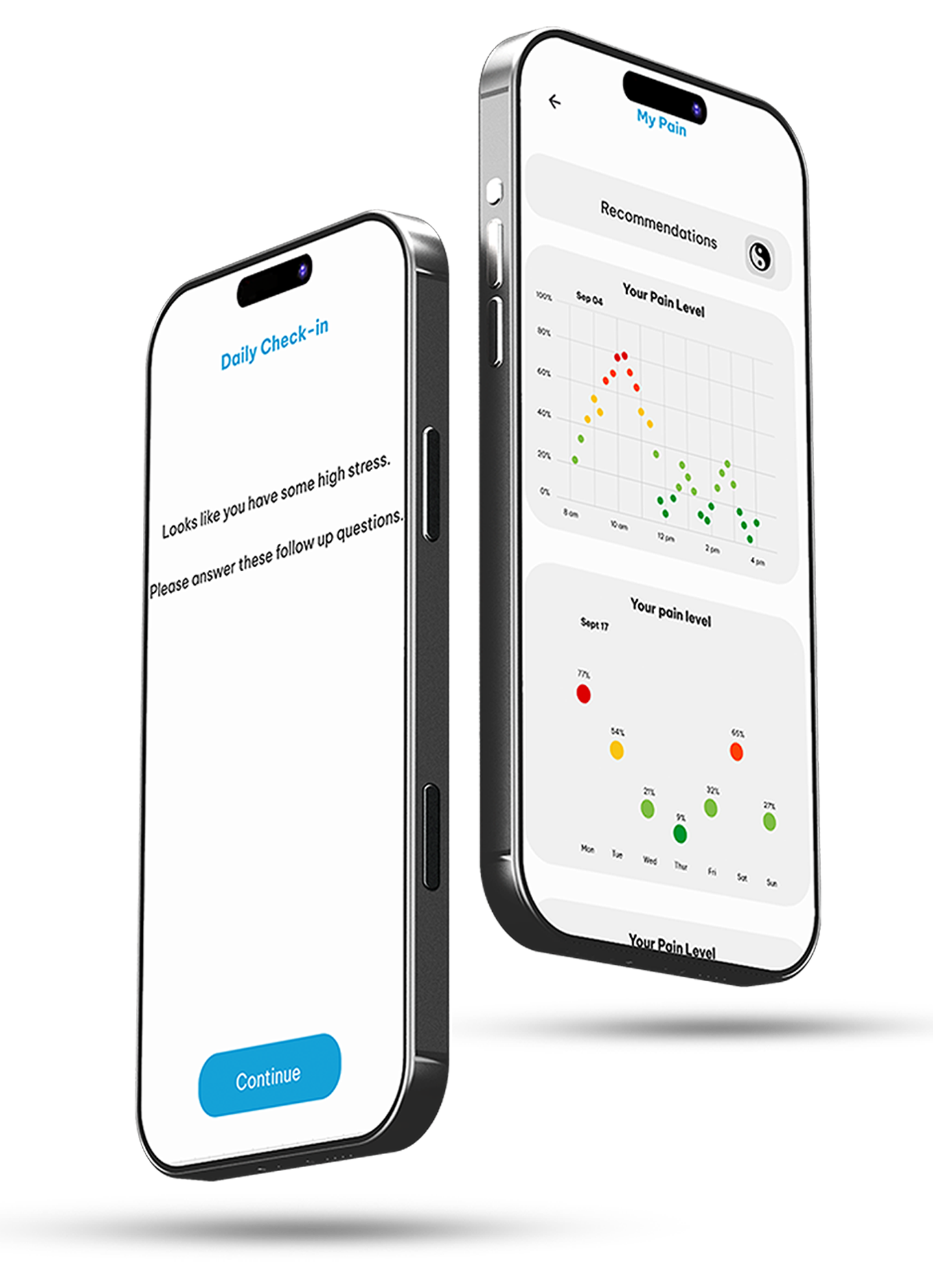
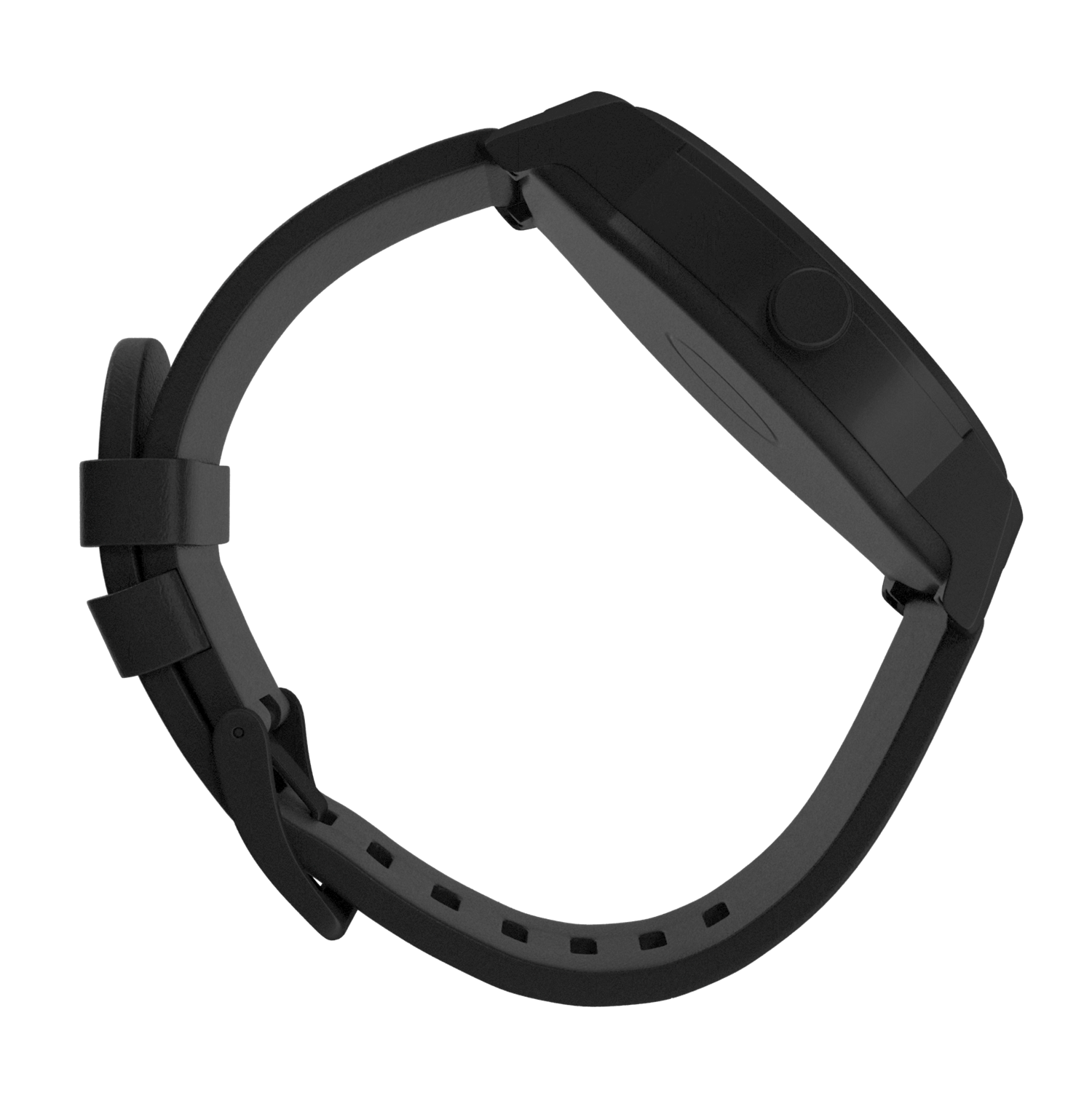
Innsightful goes beyond the current state of the art for stress detection through:
- Unprecedented accuracy levels for true psychological stress detection.
- Biosensors for Heart Rate Variability (HRV) and Electrodermal Activity (EDA), the 2 most research-backed and cutting-edge technologies combined.
- Machine Learning and signal processing-based algorithms that always enhance user understanding by analyzing day-to-day bio-signals, noticing the patterns and trends.
- Advanced AI, speech & natural language for event extraction interviews where you can simply ‘talk’ to your phone for support and get customized therapeutics that suit the situation you’re in.
What is HRV?
Heart Rate Variability (HRV) refers to the variation in time intervals
between successive heartbeats. Unlike heart rate (beats per minute), HRV captures the dynamic balance between sympathetic (fight-or-flight) and parasympathetic (rest-and-digest) systems of the autonomic nervous system (ANS).
- High HRV: Reflects a flexible and responsive autonomic system
- Low HRV: Indicates rigidity, chronic stress, or poor emotional
regulation
HRV represents the temporal variation between successive heartbeats and reflects the balance of sympathetic and parasympathetic activity within the autonomic nervous system (ANS). High resting-state HRV is associated with greater emotional regulation capacity, cognitive flexibility, and lower psychiatric symptomatology.

Source: Team, L. (2022, February 2). Why HRV be The Important Mental Health Indicator – Lief Blog. Lief Blog. https://blog.getlief.com/why-hrv-be-the-most-important-mental-health-indicator/

Source: iMotions Team. (n.d.). Exploratory Data Analysis (EDA) – Research Fundamentals. iMotions. https://imotions.com/blog/learning/research-fundamentals/eda/
What is EDA?
EDA measures sweat-induced conductance changes via eccrine gland activation under sympathetic control. Its non-invasive nature and millisecond precision make it a valuable tool in detecting emotional arousal and anticipatory anxiety.
- Phasic changes (Skin Conductance Response): Triggered by stimuli
- Tonic levels (Skin Conductance Level): Baseline emotional arousal
In a machine learning–augmented study, Gonçalves et al. (2018) showed that EDA signal fusion with EEG and facial EMG enabled over 85% accuracy in emotion classification tasks.
EDA-based models achieve >85% accuracy in emotion recognition, especially in stress-detection applications.
Incorporating HRV, sleep metrics, and biochemical markers into routine clinical practice provides a data-driven framework for early detection and precision treatment planning. Emerging clinical platforms are beginning to leverage wearable sensors, AI-driven analytics, and real-time biofeedback to support this shift.
What is HF/LF Ratio?
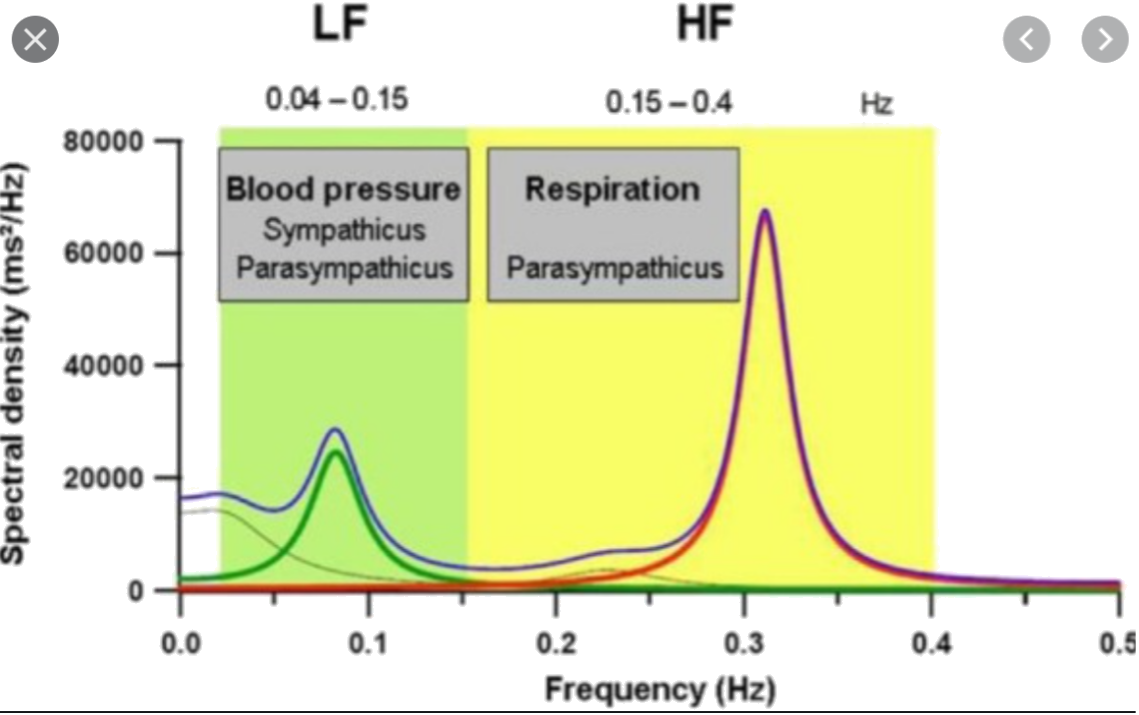
The HF/LF ratio is a key frequency-domain metric derived from Heart Rate Variability (HRV). It quantifies the interplay between the parasympathetic and sympathetic branches of the autonomic nervous system (ANS):
- High-Frequency (HF) band (0.15–0.40 Hz): Primarily reflects parasympathetic (vagal) activity linked to relaxation and recovery
- Low-Frequency (LF) band (0.04–0.15 Hz): Represents a blend of sympathetic and parasympathetic modulation, often tied to stress or arousal
HF/LF Ratio = Autonomic Balance Index
A higher ratio typically suggests sympathetic dominance (e.g., stress or fatigue), whereas a lower ratio indicates stronger parasympathetic tone and better adaptability.
Efficacy & Evidence
- In controlled stress-induction studies (e.g., Trier Social Stress Test), the LF/HF ratio significantly increased during stress, indicating sympathetic surge and vagal withdrawal. https://doi.org/10.3389/fpubh.2017.00258
- A meta‑analysis of HRV biofeedback involving 484 participants found strong reductions in stress and anxiety, suggesting that training can modulate LF/HF ratios effectively. doi:10.1017/S0033291717001003
Source: Chegg. (n.d.). LF HF 0.04–0.15 0.15–0.4 Hz 80000 Blood pressure Sympathicus Parasympathicus Respiration Parasympathicus. Retrieved from https://www.chegg.com/homework-help/questions-and-answers/lf-hf-004-015-015-04-hz-80000-blood-pressure-sympathicus-parasympathicus-respiration-para-q106395314
Source: Wu, X., Wu, J., Xia, Y., et al. (2021). Smart wearable systems for personalized health management: A review and outlook. NPJ Digital Medicine, 4, Article 153. https://doi.org/10.1038/s41746-021-00536-9
What is Just-In-Time Therapeutics (JIT)
Just-In-Time Therapeutics (JIT) refers to the delivery of personalized, adaptive interventions at moments of greatest psychological or physiological need, based on real-time sensor data and predictive analytics.
- Sensor-driven: Leverages HRV, EDA, motion, and contextual data
- Timely delivery: Interventions are triggered precisely when stress, anxiety, or dysregulation is predicted
- Personalized: Tailored to individual behavioral and physiological profiles
Goal: Reduce symptom escalation and enhance self-regulation through timely, micro-interventions (e.g., breathwork, CBT prompts, mindfulness cues)JIT is a core pillar of emerging digital mental health platforms, enabling scalable, preventive care in real-world environments. By integrating AI models with wearable tech, JIT aims to reduce treatment latency and improve long-term therapeutic outcomes. Common micro‑interventions: guided breathing, CBT prompts, mindfulness cues, ACT exercises, etc.
A 2025 Phase 2 RCT deployed a JIT app that reduced stress reactivity and improved health behaviors over 2 weeks, with ongoing monitoring up to 4 weeks mdpi.com
The “DynaM‑INT” feasibility trial targeting young adults showed promising indicators of increased stress resilience, though larger trials are required to confirm clinical efficacy bmcpsychology.biomedcentral.com.
Why Innsightful?
Proven by research, by becoming more aware of your emotions and handling stress just-in-the-moment you’ll be more able to:
Meet the demands of your whereabouts with minimal to none performance affection.
Refrain from impulsive actions that can make your situations worse.
Understand your internal and external triggers and learn a way around them.
Prevent emotional distress from becoming overwhelming or chronic.
Fuel your stress energy into positive actions as a means for personal growth.
Build progress towards resilience and get the most out of your life.
Always-on real-time detection for the right moments of stress
Human Givens
Enables us to see where a person’s life is not working well and also to tailor solutions for each individual using a combination of effective psychological interventions, education and direct practical help.
Acceptance and Commitment Therapy (ACT)
Focuses on increasing the psychological flexibility, or the ability to enter the present moment more fully and either change or persist in behavior when doing so serves valued ends.
Positive Therapy
Focuses on improving wellbeing and functioning by building on positive emotions, relationships and strengths and encourage people to view their mental health concerns in unique and positive ways.
By integrating psycho-therapeutics, Innsightful is a unique therapist in your hand that can suit everyone and every situation.
Scientific Studies
trusted by Top institutions in the world